Humayun's Tomb and Sunder Nursery are often treated as two neighbouring attractions: see the mausoleum, then find a lawn. The official histories reveal a more useful reading. UNESCO defines Humayun's Tomb as a garden-tomb of exceptional architectural influence, while Sunder Nursery combines restored monuments, formal landscape, nursery history and ecological zones beside the World Heritage property.
The Humayun's Tomb World Heritage Site Museum now makes that connection explicit. Its official site describes an underground building linking the tomb complex with adjacent Sunder Nursery and interpreting seven centuries of the Nizamuddin area. This article shows how to read the three places as one cultural landscape while keeping tickets, hours and access subject to current operator confirmation.
At a glance
Start here
- Read the tomb as architecture organised through a garden, not as an isolated monument.
- Use the site museum to connect objects and stories with the wider Nizamuddin precinct.
- Treat Sunder Nursery as both a heritage landscape and an ecological restoration project.
- Choose a sequence only after checking current tickets, closures and entry arrangements for all three components.
01
Begin with one connected precinct
UNESCO's World Heritage property centres on Humayun's Tomb and its associated garden-tomb ensemble. Sunder Nursery's official site says the park directly abuts the tomb property and lies within a larger historic geography between Humayun's Tomb and Purana Qila. The museum identifies its own building as an underground bridge between the tomb complex and Sunder Nursery.
These statements do not erase separate entrances or management. They provide a reading frame: imperial garden planning, later nursery use, conservation, ecology and contemporary interpretation occupy neighbouring ground. An editorial visit can follow those relationships, but the current ticket and access system must decide the actual physical sequence on the day.
Sources: UNESCO World Heritage Centre; Sunder Nursery Park; Humayun's Tomb World Heritage Site Museum02
See the garden before the building
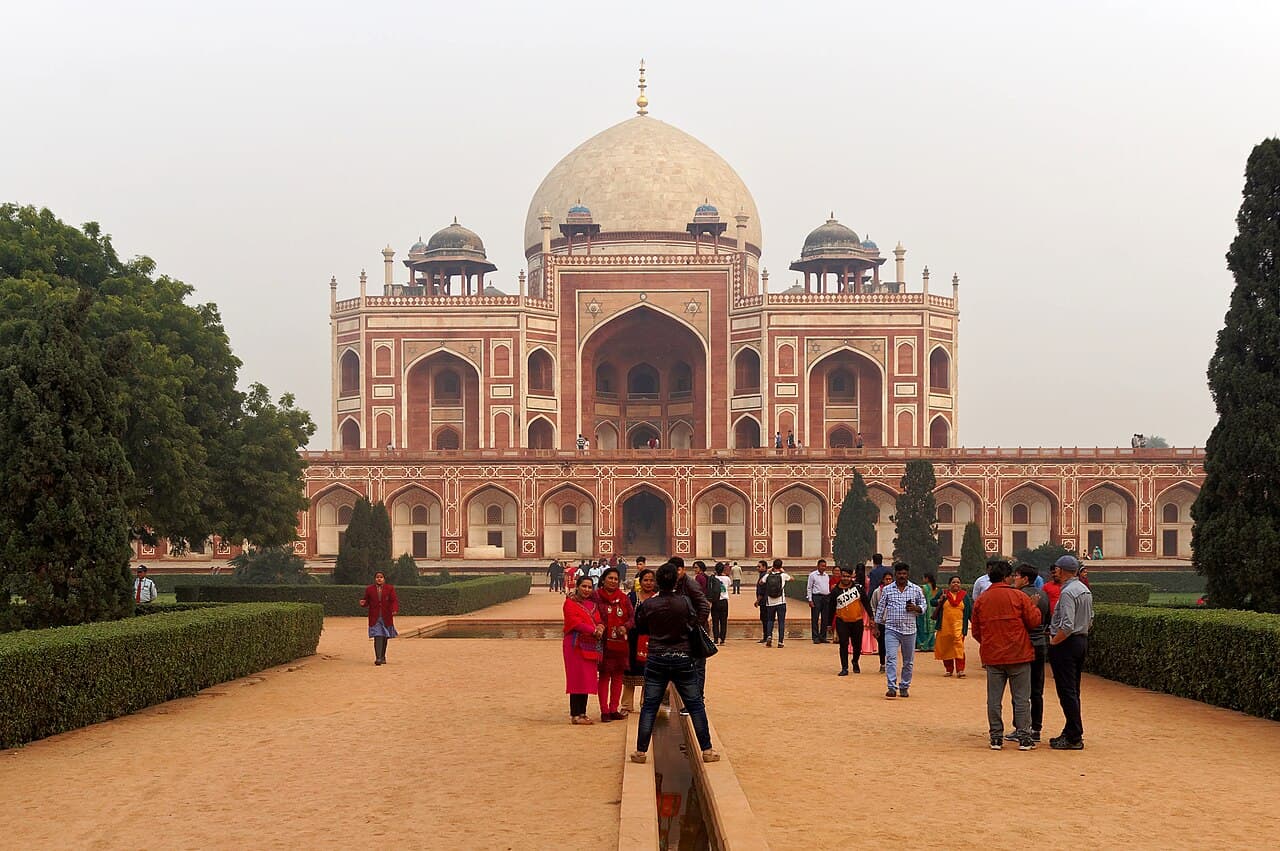
UNESCO dates Humayun's Tomb to 1570 and identifies it as the first garden-tomb on the Indian subcontinent, a work that inspired later architectural innovation. That description shifts attention from the mausoleum alone to the designed relationship between structure and garden. Approach routes, raised platforms, enclosure and planted quadrants are part of the experience rather than scenery around the important object.
Try an editorial observation exercise: stop once on the central approach, once near the platform and once at a garden edge. At each point, note what the axis reveals and conceals. This does not require claiming the exact planting is unchanged since the sixteenth century. It simply uses UNESCO's garden-tomb classification to make the spatial design legible.
Sources: UNESCO World Heritage Centre03
Look beyond the main mausoleum
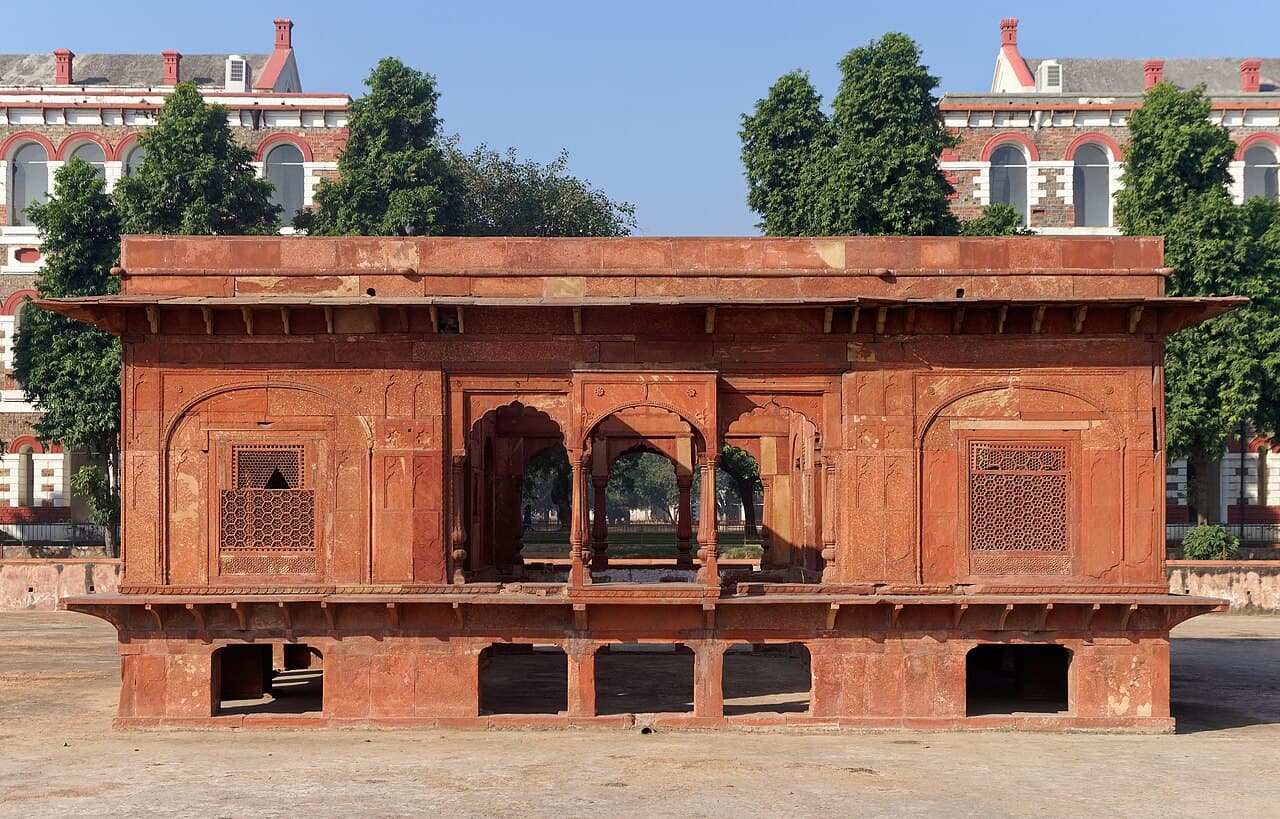
The World Heritage listing treats Humayun's Tomb as more than a single facade, and the wider precinct includes associated garden and funerary structures. The new site museum's galleries extend that view through an Emperor's Gallery, an immersive gallery and an Icons of Nizamuddin gallery. The result is an opportunity to connect dynastic architecture with a longer local history.
Do not rush directly from the gate to the most familiar photograph. Read labels and site maps to identify which structures are part of the interpreted ensemble, and avoid assigning a date or patron from memory. An editorial priority is to choose one secondary structure and ask how its scale, position or decoration changes the main tomb's apparent singularity.
Sources: UNESCO World Heritage Centre; Humayun's Tomb World Heritage Site Museum; Press Information Bureau, Government of India04
Use the museum as a connector
The official museum site says the sunken museum opened in 2024 and was developed by the Aga Khan Trust for Culture with the Archaeological Survey of India. It interprets seven centuries of Nizamuddin heritage and includes permanent galleries, temporary spaces, an auditorium and visitor facilities. The Press Information Bureau described the institution as an Archaeological Survey of India facility containing more than 500 artefacts.
Its greatest planning value is context. Visit the museum before the monuments if names and chronology feel unfamiliar, or afterward if you prefer to attach objects to spaces already seen. That is an editorial choice, not a mandated route. Check the museum's live visitor page because its weekly closure and last-entry information need not match the park or monument.
Sources: Humayun's Tomb World Heritage Site Museum; Press Information Bureau, Government of India05
Follow Sunder Nursery's changing purpose
Sunder Nursery's official history traces the site to an early twentieth-century nursery used to propagate and test plants for the new capital. Its present landscape was developed through work involving the Central Public Works Department, Archaeological Survey of India and Aga Khan Trust for Culture. Delhi Tourism records that the restored park opened to the public in 2018 after a decade of landscape and conservation work.
That layered use is visible in the park's combination of nursery functions, restored monuments, formal gardens and ecological zones. Avoid describing it as an untouched historic garden. It is a deliberately renewed landscape whose contemporary design draws on relationships among nature, garden and utility. Read old purpose, conservation intervention and public use together.
Sources: Sunder Nursery Park; Delhi Tourism and Transportation Development Corporation06
Notice ecology inside the heritage story
The park's official site describes a microhabitat zone representing Delhi's ridge, river edge, plains and other specialised environments, along with formal landscape, water features and a large ecological zone. It also distinguishes heritage, wilderness and nursery zones on its visitor map. Ecology is therefore part of the park's interpretation, not a decorative afterthought.
A useful editorial contrast is to compare the controlled geometry near monuments with the looser structure of ecological areas, while staying on permitted paths. Do not treat published species totals as a sightings guarantee. The official page documents the park's programme and recorded biodiversity; an individual visit captures only one time, route and season.
Sources: Sunder Nursery Park; Sunder Nursery Park07
Choose a sequence that answers a question
There is no universal correct order. For architectural history, start with the museum, test its ideas in the tomb garden, then compare Sunder Nursery's restored landscape. For visual observation, begin outside at the tomb, use the museum to clarify what you saw, and finish in the park. Families may prefer the most time-sensitive ticket or gallery first.
These are editorial sequences. Before adopting one, check the current official pages for each component, including separate admission, closures, last entry and any special notice. The Sunder Nursery page and Delhi Tourism page publish conflicting operating summaries, so the park's own current visitor information should lead for the park. Never assume one ticket or one opening pattern covers the full precinct.
Sources: UNESCO World Heritage Centre; Humayun's Tomb World Heritage Site Museum; Sunder Nursery Park; Delhi Tourism and Transportation Development Corporation08
Leave with three landscape layers
The first layer is the sixteenth-century garden-tomb idea recognised by UNESCO. The second is the nursery and conservation landscape now presented at Sunder Nursery. The third is the contemporary museum that interprets the Nizamuddin precinct and physically connects two major visitor areas. Holding all three prevents the day from collapsing into a list of photogenic buildings.
End by writing one observation for each layer: a spatial relationship at the tomb, a sign of landscape renewal in the nursery, and an object or interpretation idea from the museum. This is an editorial reflection exercise, not historical evidence. Verify any factual conclusion against the official labels and sources instead of turning a visual impression into a claim.
Sources: UNESCO World Heritage Centre; Sunder Nursery Park; Humayun's Tomb World Heritage Site MuseumUseful answers
Reader questions
Are Humayun's Tomb and Sunder Nursery the same site?
No. They are adjacent, separately managed visitor places within a connected Nizamuddin heritage landscape. The site museum describes itself as an underground bridge between the Humayun's Tomb complex and Sunder Nursery, but current entrances, tickets and operating rules still need separate confirmation.
Sources: Sunder Nursery Park; Humayun's Tomb World Heritage Site Museum; UNESCO World Heritage CentreWhat does the Humayun's Tomb site museum cover?
Its official site presents galleries and collections interpreting seven centuries of Nizamuddin heritage, including an Emperor's Gallery and Icons of Nizamuddin gallery. The government inauguration record says the facility contains more than 500 artefacts.
Sources: Humayun's Tomb World Heritage Site Museum; Press Information Bureau, Government of IndiaShould I visit the museum before the tomb?
Either order can work. Starting in the museum supplies names and context; visiting it afterward lets you connect displays to spaces already seen. That is an editorial choice. Let current entry slots, closures and the interests of your group decide.
Sources: Humayun's Tomb World Heritage Site Museum; UNESCO World Heritage CentreIs Sunder Nursery only a formal garden?
No. Its official site distinguishes heritage, wilderness and nursery zones and describes restored monuments, formal landscape, nursery functions and a microhabitat area representing Delhi environments. Follow the current park map and access rules when exploring them.
Sources: Sunder Nursery Park; Sunder Nursery ParkRead the evidence
Sources and further reading
These sources support the relevant sections above. Plans and comparisons are editorial suggestions. Check operators for current arrangements.
- Humayun's Tomb, Delhi ↗UNESCO World Heritage Centre · Accessed 14 September 2026
1570 date, garden-tomb significance, World Heritage status and architectural influence.
- Sunder Nursery ↗Sunder Nursery Park · Accessed 14 September 2026
Nursery history, relationship to Humayun's Tomb, restored monuments, landscape and ecological zones.
- Sunder Nursery ↗Sunder Nursery Park · Accessed 14 September 2026
Current visitor information, park zones, access, facilities, rules and special-closure notice.
- Humayun's Tomb World Heritage Site Museum ↗Humayun's Tomb World Heritage Site Museum · Accessed 14 September 2026
Opening in 2024, galleries, seven-century scope, institutional partnership and physical link between sites.
- Union Minister Shri Gajendra Singh Shekhawat Inaugurates Humayun’s Tomb World Heritage Site Museum ↗Press Information Bureau, Government of India · Accessed 14 September 2026
Government inauguration record, ASI and AKTC roles, underground design and collection scale.
- Sunder Nursery ↗Delhi Tourism and Transportation Development Corporation · Accessed 14 September 2026
Public opening in 2018, conservation partnership, adjacency and landscape design.