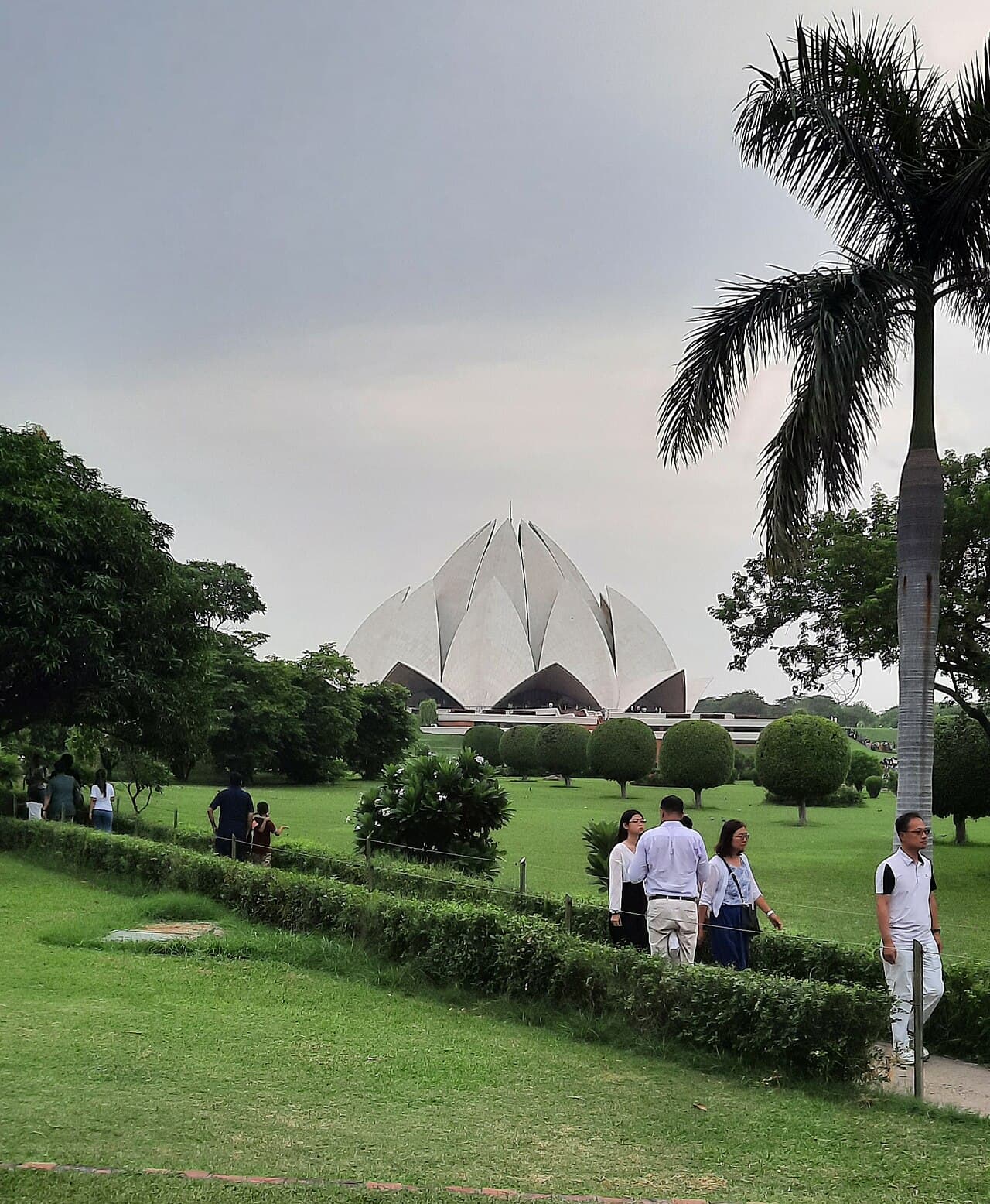
Delhi's prominent sacred sites belong to different faith communities and institutions, so there is no single etiquette script that covers them all. The Lotus Temple has a quiet prayer hall and a specific photography policy. Akshardham operates strict deposit and clothing rules. Jama Masjid remains an active mosque with access shaped by worship, and Gurdwara Bangla Sahib is a living Sikh place of devotion rather than a museum.
Respect begins with checking the host institution's current instructions and accepting that worship takes priority over sightseeing. This guide separates verified venue rules from editorial suggestions. It avoids turning custom into spectacle and does not repeat unverified religious instruction, health claims or outdated visiting hours.
At a glance
Start here
- Check each institution's own page because dress, bags, phones and photography rules differ.
- Wear clothing that covers shoulders and knees as a practical cross-site starting point, then follow the venue's directions.
- Expect prayer, services or special events to affect visitor access.
- Ask staff when uncertain; respectful compliance is more useful than arguing from another site's rules.
01
Begin as a guest, not a checklist visitor
The four sites have different purposes and authorities. The Bahá’í House of Worship welcomes silent prayer and scheduled services. Akshardham combines the mandir with separate exhibitions. Jama Masjid is an active mosque. Gurdwara Bangla Sahib is administered by the Delhi Sikh Gurdwara Management Committee and is associated with Guru Har Krishan.
That means the host community sets the visit. An editorially respectful approach is to pause at the entrance, read current signs, lower the volume and ask before joining an activity. Do not assume that public access makes every moment, room or ritual available for observation. If worship or a service is underway, follow the directions of staff and worshippers.
Sources: Bahá’í House of Worship, New Delhi; Swaminarayan Akshardham New Delhi; Delhi Tourism and Transportation Development Corporation; Delhi Sikh Gurdwara Management Committee02
At the Lotus Temple, protect the quiet
The Bahá’í House of Worship's official visitor page asks for modest clothing that covers shoulders and knees. Shoes are not worn in the prayer hall. Photography is not permitted inside the prayer hall or information centre, and the page lists restrictions on food, drink and large baggage. These are operational rules, not optional cultural tips.
The site is generally organised around visiting hours and short prayer services, and groups of ten or more are directed to arrange an appointment. Check the live page for the intended day because its schedule and notices can change. The same page contains some protocol language that may outlast the condition that produced it, so current on-site instructions should settle any discrepancy.
Sources: Bahá’í House of Worship, New Delhi03
At Akshardham, prepare for strict screening
Swaminarayan Akshardham's visitor page publishes an extensive prohibited-items policy. Mobile phones, cameras and other electronics are among the items that cannot be carried inside, while a cloakroom process is provided. The institution also requires clothing that covers shoulders, upper arms, chest, navel and knees, with wraps available under the site's stated arrangement.
The main complex and mandir are presented separately from ticketed exhibitions and the water show. Decide whether the visit is devotional, architectural, exhibition-focused or a combination, then check the live schedule before arriving. Do not carry valuable electronics merely because another Delhi monument allows them. The official rule in force at Akshardham controls admission.
Sources: Swaminarayan Akshardham New Delhi04
At Jama Masjid, let worship set the rhythm
Delhi Tourism's official Jama Masjid page locates the mosque west of the Red Fort and makes clear that visitor access is not identical throughout the day. It distinguishes general visiting periods from worship periods and notes that after sunset access is for devotees. The page also describes clothing provision at the north gate for visitors whose dress does not meet requirements.
Treat any published time as a planning lead, not a guaranteed invitation. Prayer, religious dates and local management can change access. Dress conservatively, keep passageways clear and ask before photographing people or worship. This last sentence is editorial conduct advice; it does not invent a formal photography rule. If a sign or attendant gives a more specific instruction, follow it.
Sources: Delhi Tourism and Transportation Development Corporation; Delhi Tourism and Transportation Development Corporation05
At Bangla Sahib, follow gurdwara guidance
The Delhi Sikh Gurdwara Management Committee identifies Gurdwara Bangla Sahib with Guru Har Krishan and provides institutional history and management contacts. It does not publish a fixed tourist route, so visitors should follow current signs and attendants at the entrance.
Avoid presenting community service, prayer or the sarovar as a performance arranged for visitors. Participate only where visitors are invited and ask before recording people. For a group, mobility question or organised visit, use the official management contact rather than relying on an unofficial tour description. This approach preserves the distinction between verified institutional facts and conduct suggested by this guide.
Sources: Delhi Sikh Gurdwara Management Committee; Delhi Sikh Gurdwara Management Committee06
Plan clothing, shoes and bags site by site
Modest dress is the most practical shared starting point, but the details are venue-specific. Lotus Temple explicitly asks visitors to cover shoulders and knees, while Akshardham publishes a more detailed coverage standard. Jama Masjid's official page describes clothing provision at an entrance. Footwear processes also belong to each institution, so watch the signs rather than copying one site's routine into another.
Carry as little as practical. Lotus Temple restricts large baggage, while Akshardham prohibits a broad range of personal items and operates a cloakroom process. Check these lists before leaving accommodation; discovering them at screening creates avoidable delay. This guide does not promise that storage is available at every site or suitable for every valuable item.
- Use shoulder-and-knee coverage as the minimum planning baseline.
- Check whether the venue requires more coverage or provides a wrap.
- Read the current prohibited-items list before packing.
- Follow the local footwear process at each entrance.
07
Never assume photography is part of admission
Lotus Temple prohibits photography inside the prayer hall and information centre. Akshardham does not allow phones, cameras or other listed electronics into the complex. Those policies make the decision simple at those sites: experience the interior without trying to negotiate an exception.
Where an official page does not state a complete photography policy, uncertainty is not permission. Look for current signs, ask staff, and obtain consent before photographing identifiable people. Keep equipment put away during worship. The article makes no claim that photography is allowed at Jama Masjid or Bangla Sahib merely because an official summary does not list every rule.
Sources: Bahá’í House of Worship, New Delhi; Swaminarayan Akshardham New Delhi; Delhi Tourism and Transportation Development Corporation; Delhi Sikh Gurdwara Management Committee08
Group sites by purpose, not by quantity
An editorial route should not imply that four faith traditions can be consumed in one checklist. Lotus Temple's official page identifies access from the Kalkaji Mandir and Okhla NSIC metro area. Delhi Tourism places Jama Masjid by the Red Fort, while the official gurdwara and Akshardham pages identify their own distinct locations and access information. They belong to different parts of a Delhi plan.
Choose one or two sites whose context you have time to understand. Pairing Jama Masjid with Old Delhi history is more coherent than crossing the city for a rushed sequence. Lotus Temple and Akshardham may fit a different day only after current hours, closures and transport are checked. No transfer duration is promised here; use a live map after the operating windows are confirmed.
Sources: Bahá’í House of Worship, New Delhi; Swaminarayan Akshardham New Delhi; Delhi Tourism and Transportation Development Corporation; Delhi Sikh Gurdwara Management Committee09
Check current instructions on the day
Official pages can disagree with older government summaries, and special observances can alter normal access. Use each institution's own current visitor page as the first check. For Bangla Sahib, where the management pages provide history and contacts rather than a detailed tourist rulebook, follow live management guidance at the site.
Confirm opening status, visitor entry, group requirements and prohibited items. Do not quote a fixed admission price from this guide. If a prayer period, security decision or special event changes the plan, accept the change and return at a permitted time. A respectful visit is one that remains optional for the visitor and undisturbed for the community.
Sources: Bahá’í House of Worship, New Delhi; Swaminarayan Akshardham New Delhi; Delhi Tourism and Transportation Development Corporation; Delhi Sikh Gurdwara Management Committee; Delhi Tourism and Transportation Development CorporationUseful answers
Reader questions
Can I take photographs inside Delhi's sacred sites?
Rules differ. Lotus Temple prohibits photography in its prayer hall and information centre, while Akshardham prohibits phones and cameras inside the complex. For Jama Masjid and Bangla Sahib, check current signs and ask management rather than treating silence on a summary page as permission.
Sources: Bahá’í House of Worship, New Delhi; Swaminarayan Akshardham New Delhi; Delhi Tourism and Transportation Development Corporation; Delhi Sikh Gurdwara Management CommitteeWhat should I wear to these sites?
Clothing covering shoulders and knees is a practical starting point. Lotus Temple states that standard explicitly; Akshardham publishes a more detailed modest-dress rule; Jama Masjid's official page describes clothing provision at an entrance. Follow each venue's live instructions.
Sources: Bahá’í House of Worship, New Delhi; Swaminarayan Akshardham New Delhi; Delhi Tourism and Transportation Development CorporationCan non-worshippers visit Jama Masjid?
Delhi Tourism publishes visitor information for Jama Masjid but distinguishes visitor access from worship periods and notes a devotees-only position after sunset. Check current access on the day, dress appropriately and accept any restriction connected with prayer or a religious occasion.
Sources: Delhi Tourism and Transportation Development CorporationCan a group visit Lotus Temple without arranging ahead?
The official Lotus Temple page directs groups of ten or more to book an appointment. Smaller groups should still check the current visitor page for opening status, prayer service information and any updated entry protocol before travelling.
Sources: Bahá’í House of Worship, New DelhiRead the evidence
Sources and further reading
These sources support the relevant sections above. Plans and comparisons are editorial suggestions. Check operators for current arrangements.
- Plan a Visit - Bahá’í House of Worship, New Delhi ↗Bahá’í House of Worship, New Delhi · Accessed 14 September 2026
Visitor schedule, group appointments, access, dress, footwear, photography and baggage rules.
- Visit – Swaminarayan Akshardham New Delhi – Swaminarayan Akshardham New Delhi ↗Swaminarayan Akshardham New Delhi · Accessed 14 September 2026
Opening pattern, entry categories, dress code, prohibited items, cloakroom and access information.
- Jama Masjid ↗Delhi Tourism and Transportation Development Corporation · Accessed 14 September 2026
Location, active-worship access distinctions and visitor clothing provision.
- Gurdwara Bangla Sahib ↗Delhi Sikh Gurdwara Management Committee · Accessed 14 September 2026
Institutional history, administration and association with Guru Har Krishan.
- Contact Us ↗Delhi Sikh Gurdwara Management Committee · Accessed 14 September 2026
Current official management contact route for visitor and group questions.
- Spiritual Delhi ↗Delhi Tourism and Transportation Development Corporation · Accessed 14 September 2026
Government tourism overview of Delhi's multi-faith sacred-site context and broad visitor etiquette.