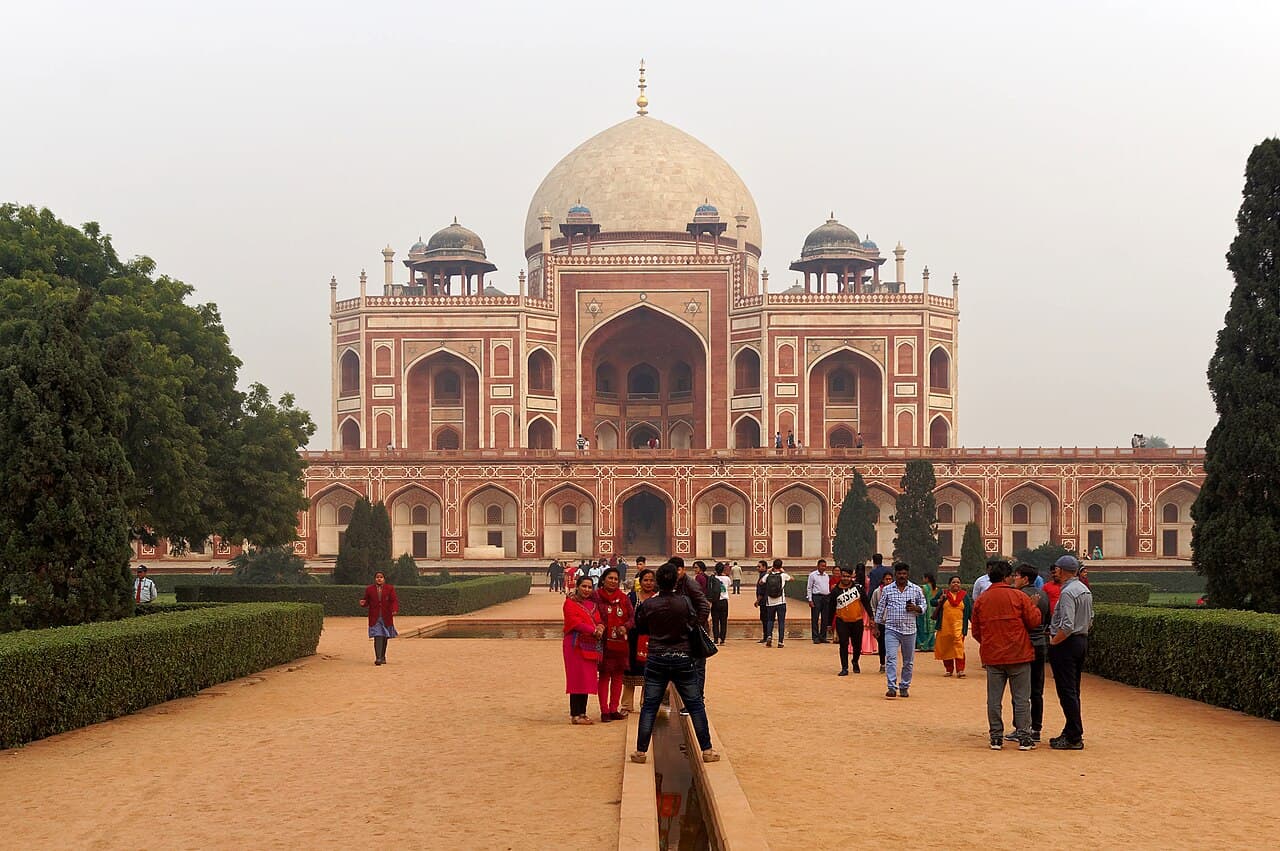
Art galleries, medieval ruins, a deer park, rooftop bars, and parking from hell — everything you need to know about Delhi's most complicated neighbourhood.
Hauz Khas Village is the most Delhi-specific neighbourhood in the city — which is saying something in a place as singular as Delhi. It is simultaneously a 14th-century monument complex, a functioning urban village, a gallery district, a bar strip, a deer park, and the kind of neighbourhood that people either love completely or avoid on principle. Ya toh yahan aate rahe, ya kabhi nahi jaate. Understanding Hauz Khas requires accepting that it contains contradictions without resolving them, which is also the basic skill set required for living in Delhi.
The History Underneath the Instagram
Before the bars and the galleries, there was a reservoir. Hauz Khas means "Royal Tank" in Persian — Alauddin Khalji built the original reservoir in the 1290s to supply water to his new city of Siri. His successor Muhammad bin Tughluq expanded it massively in the 1350s, adding the madrasa buildings and his own tomb on the western bank. The madrasa was one of the great educational institutions of medieval India; Ibn Battuta, who passed through Delhi in the 1330s, mentions it. The ruins of those madrasa buildings — the arched colonnades, the tower rooms, the stairways down to the lake — are now the rooftop decking of the bars and restaurants that occupy the upper floors of Hauz Khas Village. You eat your pasta with a 700-year-old vaulted ceiling above you. This is either the most Delhi thing possible or a minor desecration, depending on your temperament.
The Deer Park and the Lake
Hauz Khas Deer Park and the surrounding lake complex is where the neighbourhood earns its calm. Entry is free; the park runs along the southern and eastern banks of the lake and contains — as the name suggests — deer, including spotted chital who are thoroughly accustomed to humans and will eat from your hand if you have something worth offering. The lake itself is a peaceful green expanse that reflects the medieval stone on its western bank at dawn and dusk. The ASI monument complex (the main tomb and madrasa ruins) has a modest entry fee of Rs 35 for Indians, Rs 550 for foreigners. The walk along the lake's edge in the late afternoon, with the ruins lit in pre-sunset gold, is among the most underrated urban walks in India.
The Art Galleries
Hauz Khas Village's gallery scene peaked roughly around 2010–2015 but a committed core remains. Gallery Espace on the main village strip has been showing contemporary Indian art seriously since the 1990s — the shows rotate every few weeks and the quality is consistently high. Stainless Gallery focuses on emerging artists. Walk the main lane and the connecting alleys; galleries are interspersed with boutiques and cafes in a way that makes accidental discovery pleasant rather than effortful. Opening exhibitions typically happen on weekend evenings; the wine is usually adequate and the company is the most interesting Delhi has in any single room.
The Food and Cafe Scene
For coffee and daytime sitting, Kunzum Travel Cafe operates on an informal donation basis — you pay what you think the experience was worth, or nothing. It is a genuinely utopian concept that works because the regulars are honest. Hauz Khas Social anchors the nighttime scene: multi-floor, occasionally overwhelming, but the food is better than its reputation suggests and the view over the lake at sunset justifies the Instagram crowd. For something quieter, Imperfecto in the village has a Mediterranean menu and a rooftop terrace less crowded than Social. The rule of thumb: the further you walk from the main village entrance, the fewer tourists you will encounter and the more interesting the establishments become. Village ke andar ghuss ke dekho — bahar se yeh jagah dikhti nahi.
Nightlife
The bar scene here runs from approximately Thursday to Saturday evenings at full intensity. Raasta occupies the ruins level and has the best reggae nights in the city. Unplugged above the village draws a mixed crowd of South Delhi regulars and North Delhi visitors making the journey. The street itself on a Saturday night is a spectacle of parked cars, delivery boys, couples, and groups of friends who have been coming here since college — the full cross-section of urban Delhi youth culture, unified by the desire to drink somewhere with a view of something ancient. The energy is high and mostly good-natured.
The Parking Problem
No guide to Hauz Khas is complete without addressing the parking. It is genuinely terrible. The village lane is narrow, the parking attendants are unofficial, and on weekend evenings the entire approach from Aurobindo Marg backs up for 400 metres. The correct solution is the Metro: Hauz Khas station on the Yellow Line is a 15-minute walk or a Rs 50 auto ride from the village entrance. Alternatively, take a cab and drop off at the village gate — do not attempt to drive in. If you must drive, the Hauz Khas Sports Complex has overflow parking that is a 10-minute walk and significantly less punishing. This has been the advice since 2009 and it remains as relevant as ever.
Story
Lifestyle
Reading time
7 min
Legacy editorial
First published 26 January 2026
Verify changing facts and prices independently.
More scenes from the destination
General destination planning
Check current details before you go
These official links are general planning resources, not evidence for this article. Opening hours, fares, prices, access rules and businesses can change, so confirm details independently for your dates.