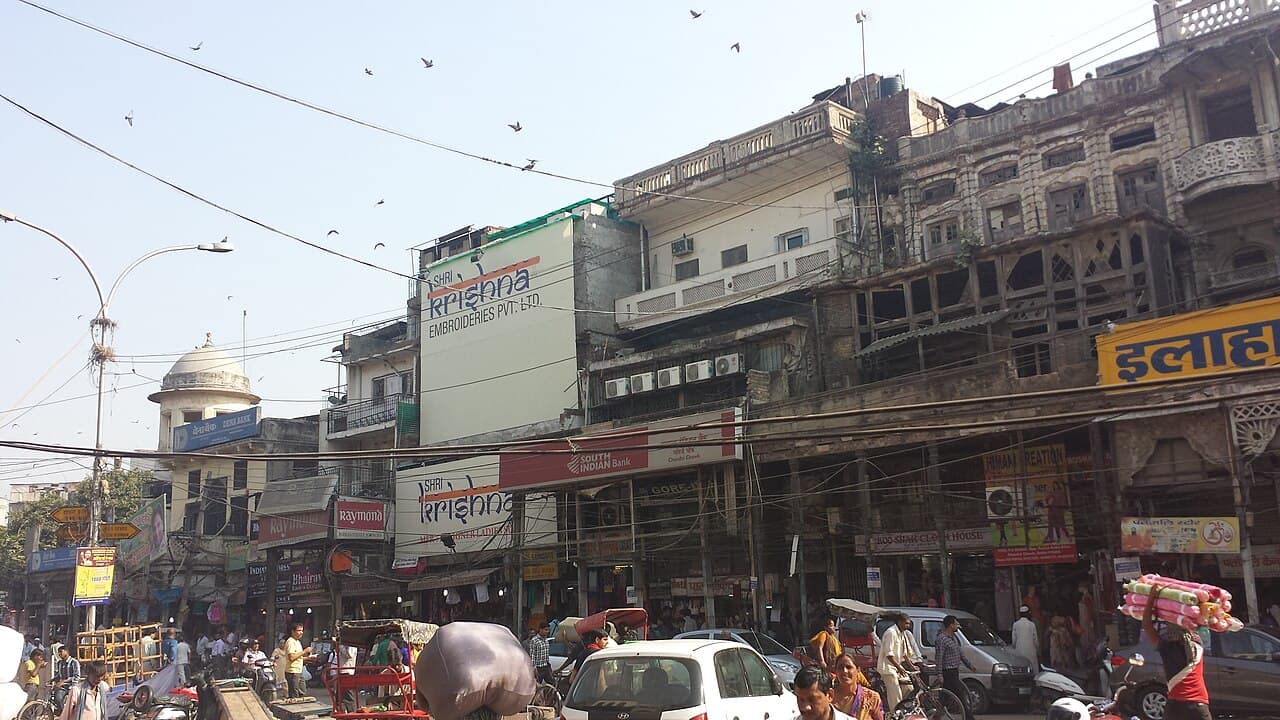
Sarojini Nagar for fashion, Lajpat Nagar for weddings, Janpath for souvenirs, Paharganj for backpackers, Meena Bazaar for textiles, Dilli Haat for crafts — and the bargaining tactics that work in each.
Delhi is a city built on commerce. It has been a market since before the Mughals arrived, and the Mughals simply built better markets on top of the existing ones. The result, after a thousand years of accumulated trade culture, is a city where shopping is not retail but performance — a negotiation, a relationship, an encounter. The street markets of Delhi are not inconveniences to be replaced by malls. They are the city's connective tissue. Jab tak baazaar hai, dilli hai. Here is where to go, what to buy, and crucially, how to not get taken for the price that appears on nothing because nothing has a price tag.
Sarojini Nagar: The Fashion Economy
Sarojini Nagar Market in South Delhi is where Delhi's fashion-conscious middle class shops with a ferocity that confounds tourists. The market's backstory is specific: the vendors here sell export surplus and seconds from the garment factories that supply global fast-fashion brands. You will find, on any given Saturday, H&M tags, Zara labels, Next swing-tickets — attached to clothing that retailed in Europe for Rs 3,000–8,000 and is available here for Rs 150–500. The quality varies; the selection is overwhelming; the crowds on weekends are intense in a way that requires a specific mental preparation.
Best time: Wednesday or Thursday mornings, when new stock arrives and the weekend crowd has not yet descended. The rule: quoted prices are exactly double the fair price. Start at 40% of the first quote, settle around 50–55%. On branded export surplus, the vendors know exactly what they have and will not go below a floor; respect the floor. The Sarojini auto stand on the market's south side has fixed-rate autos to the Metro.
Lajpat Nagar: Wedding Shopping Central
Lajpat Nagar Central Market and the surrounding lanes are where the Indian wedding economy comes to life. The four-block central market specialises in ethnic wear — salwar kameez, lehengas, sherwanis, dupattas, embroidered sarees — at prices that are 60–70% lower than the same merchandise in Khan Market or Select Citywalk. The Sindhi community that established this market after Partition brought the trading culture of Hyderabad (Sindh) and it shows: the vendors here are confident, knowledgeable about fabric, and will talk you through every option with genuine expertise.
The street stalls around the central market are where the real wedding infrastructure lives: bangles at Rs 20 per dozen, embroidered blouses at Rs 300, glass work dupatta at Rs 450. For men, the sherwani shops on Block 23 will do same-day alterations. Go on a weekday; Saturday-Sunday Lajpat Nagar is genuinely difficult to navigate. The Lajpat Nagar Metro station (Pink Line) is directly adjacent.
Janpath: The Tourist Market That Is Actually Good
Janpath Market, running along the road of the same name between Windsor Place and Connaught Place, is the capital's established tourist shopping street — and better than its reputation. The Tibetan Market at the northern end sells authentic wool products, thangka paintings, and silver jewellery that is not all fake. The main Janpath strip has embroidered kurtis (Rs 300–600), block-print bedspreads (Rs 400–800), silver anklets and jhummka earrings (Rs 150–400), and the full range of Indian souvenir culture.
The bargaining here is aggressive and expected. Vendors target foreigners with a 400% markup; Indians typically pay 150% of a fair price before negotiating down. Counter-strategy: walk the entire lane before buying anything, compare three shops for the same item, and only then commit. The Rs 200 kurti in the first shop is Rs 160 in the sixth. Patience is money on Janpath. Pehle poora lane dekho, phir mol karo.
Paharganj: The Backpacker Bazaar
The Main Bazaar road of Paharganj, running west from New Delhi Railway Station, is one of the most famous backpacker streets in Asia — equal parts transit hub, cultural immersion, and mild sensory overload. The market sells everything the budget traveller needs: travel backpacks (Rs 800–2,000), printed cotton hippie trousers (Rs 200–400), hash pipes and incense (do not ask us about the former), local SIM cards, Hindi-English phrasebooks, Ayurvedic supplements of varying credibility, and a full range of Indian textiles at backpacker prices.
The street itself — narrow, constantly congested, smelling of frying oil and exhaust and marigold garlands — is a 24-hour theatre. The budget guesthouses that line the back lanes start at Rs 400 a night. The makhani dal at any of the rooftop restaurants is reliable and costs Rs 150. Paharganj is not for everyone; it rewards people who can tolerate chaos in exchange for proximity to the city's less curated reality.
Meena Bazaar: Old Delhi Textiles
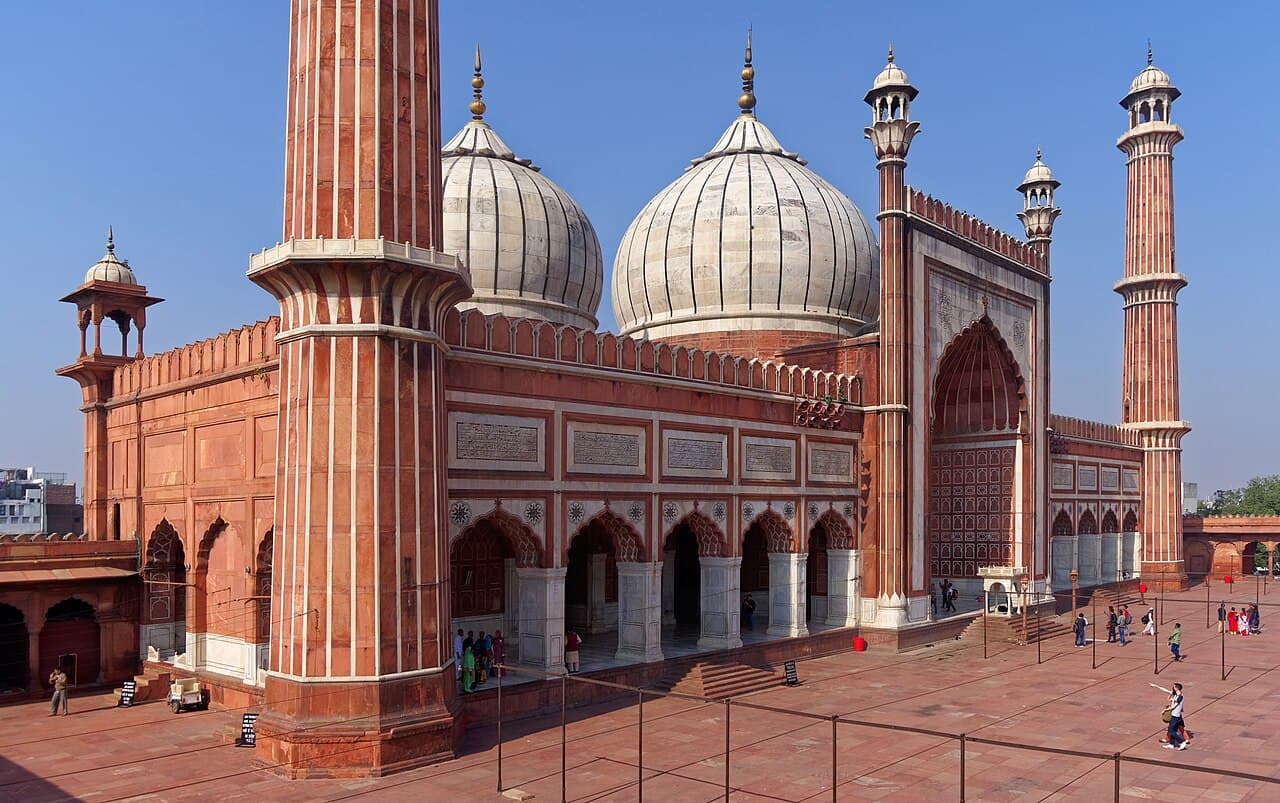
In the shadow of Jama Masjid, running from the mosque's southern gate toward the Chawri Bazaar wholesale district, Meena Bazaar is Old Delhi's textile and accessories market — and one of the most beautiful shopping environments in the city. The speciality is Muslim wedding trousseau: heavily embroidered bridal wear in shades of red, maroon, and deep green; zardozi work (metal-thread embroidery); chikan kurtas from Lucknow; printed cotton mul mul (muslin) by the metre.
The shops are small, the lanes are narrow, the shopkeepers will serve chai before showing you anything serious. This is the old merchant culture of Shahjahanabad — unhurried, relationship-based, willing to spend an hour with you even if you buy nothing. Prices are fixed in most shops (a departure from the rest of the list); the courtesy in return is that they will not try to sell you something inappropriate. Go on a Friday morning, after Fajr and before Juma, when the market is alive but not yet heaving.
Dilli Haat: The Curated Craft Market
Dilli Haat on Aurobindo Marg, adjacent to INA Metro station, is the one government-run market on this list — and the one government intervention in Delhi's retail ecology that actually works. The concept: rotating stalls from craft cooperatives across all 28 Indian states, allowing artisans to sell directly without middlemen, in a pleasant open-air campus with food stalls from every region. Entry is Rs 30 for adults.
The stock at Dilli Haat is genuinely excellent: Madhubani paintings from Bihar (Rs 500–5,000), blue pottery from Jaipur (Rs 200–800), Channapatna wooden toys from Karnataka (Rs 100–600), Kashmiri walnut wood bowls (Rs 400–1,500), Warli art on fabric. The prices are firm and fair — the artisans are selling their own work and know its value. Do not try to bargain aggressively; a gentle ask of 10% is reasonable, anything more is disrespectful. The food stalls serving regional Indian cuisines are an education in themselves: Odia pakhala (Rs 80), Naga smoked pork curry (Rs 180), Manipuri black rice kheer (Rs 60). Plan two hours minimum. Ek baar andar gaye toh bahar aana mushkil ho jaata hai.
The Universal Bargaining Rules
- Never accept the first price — it is always a test.
- Walk away if the number is wrong. 70% of the time, the vendor calls you back with a better offer within ten metres.
- Cash is leverage — pulling out a specific note and saying "bas itna hai mere paas" (I only have this much) is respected as a negotiating position.
- Volume discounts are real — buying three of the same item unlocks pricing that individual purchase does not.
- Smile and stay cheerful — aggression closes deals worse than warmth. The best deals in Delhi's markets are made between people who are genuinely enjoying the encounter.
Story
Travel
Reading time
8 min
Legacy editorial
First published 12 February 2026
Verify changing facts and prices independently.
More scenes from the destination
General destination planning
Check current details before you go
These official links are general planning resources, not evidence for this article. Opening hours, fares, prices, access rules and businesses can change, so confirm details independently for your dates.